
About Us But Not About Us Review: Finding New Meaning in Familiar Roles
October 23, 2026
By Allain Brutas
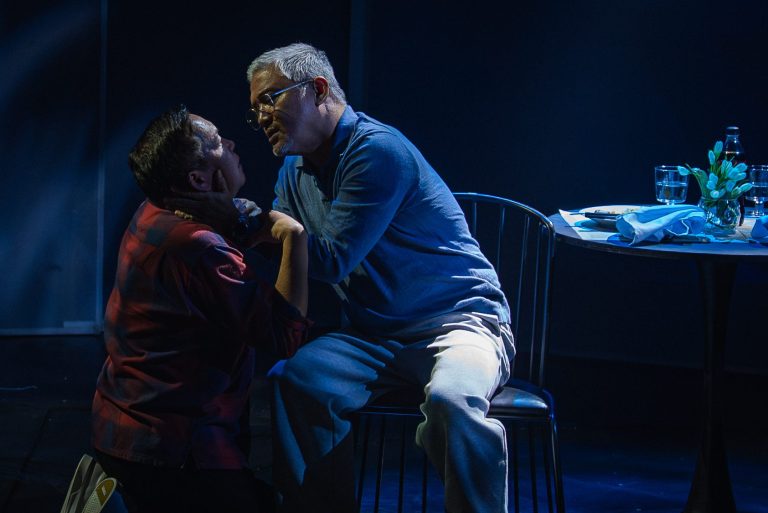
The alternate cast of About Us But Not About Us brings different interpretations to familiar characters, with some performances making a stronger impression than others.
Having seen both the 2022 film and the February 2026 theatrical run of About Us But Not About Us, I was curious to see how the all-alternate cast of Tuxqs Rutaquio, Kobie Brown, and Andoy Ranay would approach the complex dynamics of Eric, Lance, and Marcus—roles previously played onstage by Romnick Sarmenta, Elijah Canlas, and Epi Quizon, respectively.
The result is an interesting mix of fresh interpretations and familiar performances. While some of the actors bring a noticeably different energy to their characters, others struggle to establish an identity distinct from their counterparts.
Andoy Ranay's Marcus: A Different Kind of Scene-Stealer
Marcus remains one of the strongest additions to the theatrical adaptation, and once again, the character steals practically every scene he appears in.
Epi Quizon's portrayal remains my personal favorite. His explosive, sharp-tongued personality was exactly how I imagined Marcus would be—unpredictable, confrontational, and effortlessly commanding attention.
Ranay, however, takes the character in a different direction. His Marcus is more flamboyant, sassy, and theatrical, leaning into the mannerisms one might associate with an outspoken, openly queer English professor.
It's a noticeably different interpretation, but one that works on its own terms.
The contrast becomes even more apparent in Marcus' interactions with Eric. Where Quizon and Sarmenta portrayed a more discreet, understated relationship, Ranay and Rutaquio turn their exchanges into something louder and more openly confrontational.
Their dynamic occasionally resembles the familiar theatrical portrayal of an older gay couple constantly bickering. Whether that heightened characterization adds humor and personality or leans too heavily on stereotypes will depend on the viewer.
Either way, Ranay makes his presence felt, proving that Marcus remains one of the production's most entertaining characters.
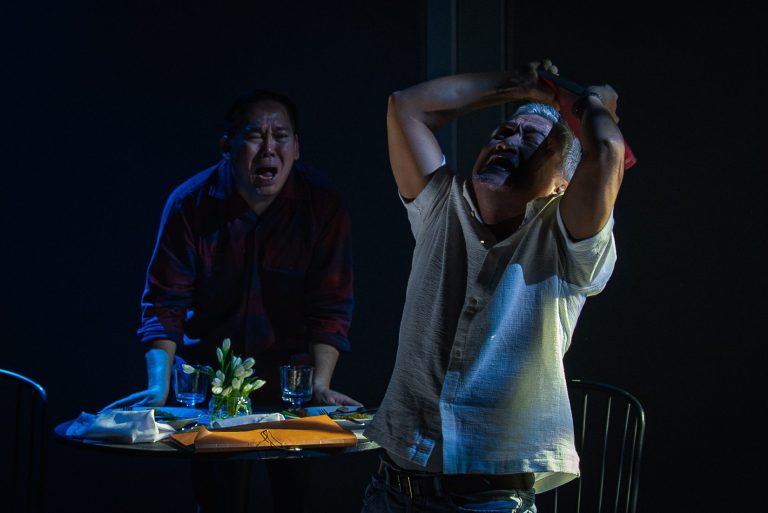
Tuxqs Rutaqiou (as Eric) and Andoy Ranay (as Marcus)
Tuxqs Rutaquio's Eric: Less Restrained, More Confrontational
Rutaquio's interpretation of Eric is perhaps the most striking departure from the earlier theatrical run.
Sarmenta approached the character with restraint, allowing Eric's calculating nature to emerge gradually through subtle expressions, carefully measured dialogue, and an underlying sense of control. His performance made Eric's manipulative tendencies feel all the more believable precisely because they were not immediately obvious.
Rutaquio, on the other hand, plays Eric with considerably more aggression and impulsiveness. His portrayal is brash, direct, and less concerned with concealing the character's intentions. Interestingly, this approach makes Eric's complicated relationship with Lance feel more plausible in certain moments. It also lends greater weight to Marcus' concerns about their relationship, as Eric's behavior becomes more visibly questionable.
Both interpretations offer different ways of understanding the same character. Sarmenta's Eric is more quietly calculating, while Rutaquio's is more openly volatile.
Ultimately, the stronger interpretation comes down to personal preference. For me, Sarmenta's restrained performance remains the more compelling of the two.
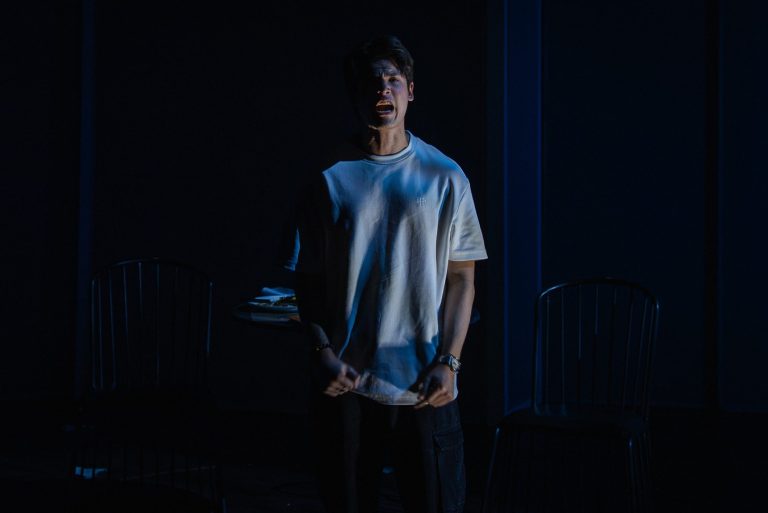
Kobie Brown as Lancelot
Kobie Brown's Lance: A Familiar Performance in a Different Package
Of the three alternates, Kobie Brown arguably fits the physical description of Lance more naturally, particularly given his Filipino-British background.
This becomes especially noticeable during the scene in which Eric asks Lance whether he can speak Filipino. Brown's mixed heritage adds an interesting layer to that exchange, one that could have opened the door to a more distinctive interpretation of the character.
While Brown certainly looks the part, his performance feels remarkably similar to Elijah Canlas' portrayal. From his mannerisms and delivery to the carefully timed pauses before addressing Eric as "sir," much of what Brown brings to the role feels like a recreation of a performance I had already seen in both the film and the February theatrical production.
I would have liked to see Brown take greater advantage of his own background and personality to offer a different perspective on Lance.
After all, one of the more exciting aspects of watching alternate casts is discovering how different actors can bring their own interpretations to the same character.
In Brown's case, however, I found myself seeing Canlas' Lance all over again—only in a slightly taller frame. That is not necessarily a reflection of Brown's abilities as an actor, but rather a missed opportunity to make the role distinctly his own.
For a production without an intermission, the play still feels slightly too long. There are moments when the pacing could benefit from tighter editing, particularly given how dialogue-heavy and psychologically demanding the material can be.
I also continue to question the decision to remove the apple pie conversation between Eric and Lance at the beginning of the story.
That exchange serves a narrative purpose, and its absence weakens the connection to Professor Dimalanta's remarks toward the end. Without the earlier conversation, the reference does not land with quite the same impact.
These are relatively minor concerns in the larger picture, but they are noticeable, especially for viewers familiar with the film.
The Verdict
Despite these reservations, About Us But Not About Us remains a successful transformation of Jun Robles Lana's pandemic-era film into a theatrical production.
The alternate cast demonstrates just how much an actor's interpretation can change the dynamics of a story, even when the script and characters remain the same.
Ranay's flamboyant Marcus and Rutaquio's more confrontational Eric bring fresh energy to the production, while Brown's Lance, though fitting the character physically, could have benefited from a more individual approach.
Having seen multiple versions of the story, I still find myself drawn to the performances of Sarmenta, Canlas, and Quizon. Nevertheless, the opportunity to revisit these characters through different actors offers an interesting perspective on the material.
And with another of Lana's acclaimed films, Die Beautiful, set for a theatrical adaptation, my anticipation remains high.
If About Us But Not About Us is any indication, there is plenty to look forward to as more Filipino films find new life onstage.
About Us But Not About Us is running only until October 25, 2026 at the Power Mac Center Spotlight Black Box Theatre Spotlight, Circuit Makati.
Photos courtesy of Sef Tafalla of IdeaFirst LIVE!