
Mother Mary Review: Anne Hathaway Leads A Surreal Pop-Star Fever Dream
May 18, 2026
By: Jonathan Matthew Subido
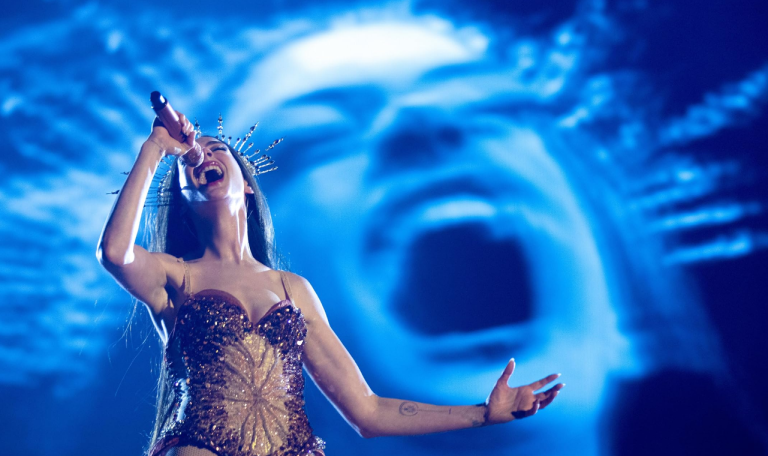
Beyond the Glitter: Step Inside the Phantasmagoric Fever Dream of A24’s Latest
Disclaimer: Despite the evocative title, Mother Mary is not a religious film, nor is it a retelling of any biblical events. The characters depicted in the movie bear no relation to the Virgin Mary or anyone from ancient scripture. If you walk into the theater expecting a Sunday school lesson, you’ll be sorely disappointed (or perhaps pleasantly surprised). In this world, the title refers to a stage name, a meticulously crafted persona for a modern pop superstar, and the fanatical, almost religious worship her "disciples" project onto her.
The atmosphere of the film gives off a surreal, sometimes unreal vibe that is both claustrophobic and phantasmagorical. As a viewer, you constantly feel there is something deeper lurking beneath the dialogue. The premise follows the pop titan Mother Mary (played by Anne Hathaway, The Devil Wears Prada, Les Misérables, Eileen), who feels dangerously disconnected from her own humanity. In a desperate bid to regain her sense of self, she seeks to reconnect with Sam Anselm (played by Michaela Coel, I May Destroy You, Black Panther: Wakanda Forever), an imperious fashion designer she once worked with. It doesn't feel like your usual celebrity drama; instead, it is akin to a fever dream where a character's internal perspective shapes the very visuals and tone of the scene, creating imagery that is as haunting as it is beautiful.
Lingering in the Red: Why Lowery Wants You to Feel the Suffocation of Fame
The film is directed by David Lowery (The Green Knight, A Ghost Story, Pete’s Dragon, Ain’t Them Bodies Saints, The Old Man & the Gun, Peter Pan & Wendy), a filmmaker known for being a true "chameleon." Lowery is a modern auteur who effortlessly blends meditative art- house techniques with mythic storytelling. In the past, Lowery has stated that he wants his movies to feel like "bedtime stories," places where a sense of nostalgic wonder persists even in the dark.
However, he also loves to dabble in deconstruction. He famously takes away the "spectacle" of his characters to reveal their frail, human selves. Whether he’s putting a grieving husband under a bedsheet or turning a medieval quest into a psychedelic journey, Lowery turns simple premises into slow, psychological character studies.
With Mother Mary, he seeks to make the film feel as tactile as the red fabric of a couture dress; the cinematography is so rich you feel like you can almost touch the screen. By utilizing a still, unhurried camera, he forces the audience to linger in scenes far longer than a standard Hollywood edit would allow. This intentional stillness makes the viewer feel claustrophobic, perfectly symbolizing how trapped Mary feels within the velvet cage of her life as a global icon.
In Mother Mary, we witness Anne Hathaway as a pop star..
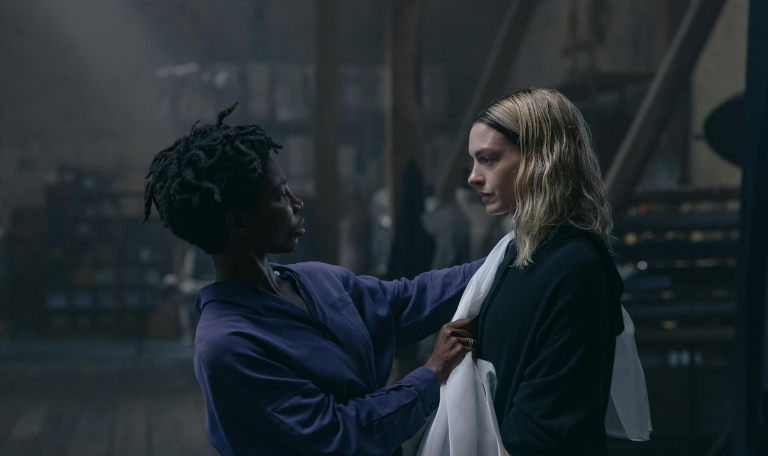
Anne Hathaway as Mother Mary and MIcaela Coel as Sam
Armored in Silk: Why the Fashion in Mother Mary is a Battlefield
It’s no secret that the inspiration for the titular character is drawn from the lives of modern titans like Taylor Swift and Beyoncé. The film captures the dizzying highs and the crushing lows of being the face of a generation. To sell the illusion of Mary’s stardom, the music has to be more than just "disposable background noise." Fortunately, the soundtrack is a powerhouse. With an impressive selection of songs co-written by Charli XCX and Jack Antonoff, the film gives Mary a sonic identity that makes her feel like an artist who could actually top the Billboard charts in the real world.
Equally important are the costumes. The clothes designed for this film are uniquely grandiose, flamboyant, and ethereal. While Mary’s stage outfits capture the classic pop-star aesthetic, the pieces imagined by Sam are the true standouts. In several surreal sequences, Sam envisions Mary in an armored dress in the likeness of Joan of Arc, a literal suit of armor for a woman going to war with her own public image. Then, of course, there is the “Red Dress,” a garment so striking and symbolic that it essentially haunts the characters throughout the entire film.
Stardom’s Scars: When the Woman Behind the Brand Comes Home to Reclaim Her Soul
The two leads, Mary and Sam, are the beating heart of this story. Their chemistry is fascinating to witness, largely because Lowery gives their monologues and performances all the time in the world to breathe. Hathaway delivers a performance that feels like she is playing a "Pop Frankenstein." Mary is a creature built through corporate choice, designed to appeal, to meet impossible expectations, and to satisfy the insatiable desires of a global fandom.
Coel provides a perfect foil as Sam. Her role is that of a woman who reveres Mary’s talent but remains bitter about being left behind as Mary ascended to the heavens of fame. When Mary returns to Sam’s world, an inner conflict stirs in her heart. Unlike the fans, Sam can see through the glitter to the girl underneath.
Their history is a common one in the industry: as stars get bigger, they often shed the people who helped them get there in favor of something newer and glossier. But having reached the pinnacle, Mary realizes she has become a machine without a soul, feeding her fans a diet of PR-approved messaging. Sam acts as the mirror Mary doesn't want to see, the one person who knows what is actually behind the perfect facade.
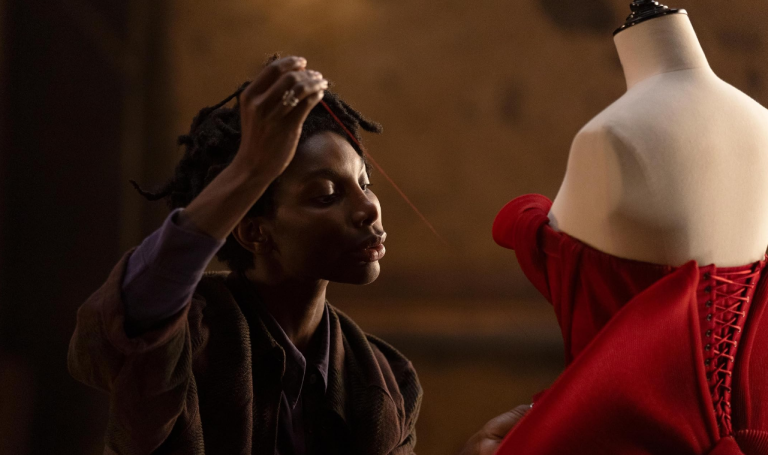
Micaela Coel is an imperious fashion designer
Haunted by the Hype: When Fame Becomes a Literal Ghost Story
Surprisingly, Mother Mary leans into psychological horror elements that wouldn’t be out of place in a classic Italian Giallo film. While the supernatural events are largely metaphorical, the way they are staged makes them feel terrifyingly real. With an intense musical score pulsing in the background, the dream-like scenes become haunting and surreal. These aren't just random "scare" moments; they carry a deep meaning that provides the film's unique flavor. These brushes with the "other side" help give the movie a memorable identity that separates it from standard musical biopics.
A Beautiful Slog: Navigating the Stillness and the Sluggishness of the Spotlight
While the film offers a unique take on the dehumanization of fame, it is not without its glaring flaws. For many, the pacing will be a significant barrier. It is very slow, and it takes a considerable amount of time for the narrative gears to truly start turning. Lowery’s insistence on lingering in rooms where there is nothing but dialogue, and no music to soften the blow, is a bold choice, but a difficult one. Don't be surprised if you see some audience members checking their phones during the more stagnant stretches. Furthermore, the ending is somewhat underwhelming, offering very little payoff for the massive amount of psychological tension built during the first two acts.
However, the silver lining remains the incredible soundtrack. It carries the film when the plot begins to sag, setting the mood and giving Mary a level of characterization that the script sometimes misses. The original songs are genuinely catchy, proving that even if the movie drags, the "brand" of Mother Mary remains undeniable.
Melodies and Metaphors: A Surreal Deep-Dive for the Truly Attentive
In the end, Mother Mary is a strange creature: sometimes painfully slow, sometimes electrifyingly intense, and always deep for those willing to hunt for hidden messages. Its surreal scenes and excellent use of music are the primary engines that carry the viewer through the journey. In this parasocial age, where pop stars are treated as literal deities and every social media post is a scripture, the film serves as a necessary critique of our fanatical devotion.
It is a film that certainly isn't for everyone. If you're looking for a fast-paced "Rise to Fame" story, look elsewhere. But for those who enjoy psychological dramas that refuse to provide easy answers, Mother Mary is a haunting look at the price of the pedestal.
Final Rating: 3/5 ⭐⭐⭐☆☆
Photos courtesy of imdb.com